If you are shopping in Eagle and wondering why one luxury home commands a much higher price than another, you are asking the right question. In this market, value is not just about square footage or a long list of upgrades. It often comes down to the things you cannot easily change later, like the lot, the setting, the design, and the lifestyle the property gives you access to. Let’s dive in.
Eagle luxury starts at a different baseline
In Eagle, luxury pricing sits at a higher starting point than many buyers expect. The Q1 2026 Ada County MLS report shows Eagle MLS area 0900 with an average sold price of $1,161,444 and a median sold price of $989,900.
That context matters when you are evaluating a home. Realtor.com’s June 2026 city-level report lists Eagle at a $1,029,950 median listing price and 43 median days on market, compared with $675,000 and 36 days on market for Ada County overall. In simple terms, the million-dollar range is a normal reference point in Eagle, not an unusual exception.
Lot quality drives long-term value
When buyers talk about a home “feeling expensive” in Eagle, they are often reacting to the site as much as the house itself. Larger lots, better separation from neighboring homes, privacy, and usable outdoor space can create a value gap that is hard to ignore.
Eagle’s planning documents support that idea. The city’s comprehensive plan highlights large-lot residential uses, Boise River views, open space, and view-sensitive placement, especially in the River Plain Planning Area. That means land characteristics are not a side detail here. They are a major part of the value story.
Why two similar homes can price differently
Two homes with nearly identical floor plans can feel very different once you step outside. One may sit on a lot that gives you wider spacing, more privacy, a better view corridor, or a more natural connection to the landscape.
The other may offer the same interior finish level but less separation, less usable yard space, or a setting that feels tighter. In Eagle’s luxury segment, those differences often matter more than cosmetic upgrades.
Setbacks shape how a property lives
City standards also affect how a lot functions. Eagle code requires 30-foot front-yard setbacks on arterial and collector streets in residential districts, 25-foot street-side setbacks on those streets, and a 25-foot setback for front-load garages from the back of sidewalk.
For you as a buyer, that can influence how open the property feels, how the home sits on the land, and how much flexibility may exist for future changes. A large lot on paper does not always translate to the same usable experience in real life.
Privacy and views create scarcity
Some luxury features can be added later. A kitchen can be renovated, floors can be replaced, and lighting can be updated. Privacy, river adjacency, and protected-feeling views are much harder to recreate.
That is why permanent site advantages often carry more weight in Eagle. If a property gives you meaningful separation, a strong outdoor orientation, or a setting that feels hard to duplicate, that premium may be more durable over time.
River-adjacent homes can be more complex
Homes near the Boise River can offer a distinctive setting, but they may also come with added planning considerations. Eagle floodplain standards require elevation or floodproofing measures for new construction and substantial improvements in mapped flood hazard areas.
That does not automatically make a river-area property less appealing. It simply means you should understand how floodplain rules may affect future additions, major remodels, or redevelopment plans before you pay for the location premium.
Architecture matters in Eagle
In many markets, buyers focus mostly on size and finishes. In Eagle, design has extra weight because the city actively reviews architecture and site design.
The city’s design review guidelines state that projects requiring review must comply with the Eagle Architectural and Site Design Book, and only styles shown in that book are permitted styles. The Design Review Board also states that its role includes protecting property rights and values while reviewing building design, landscaping, site planning, grading, and development.
Fit and compatibility support value
For luxury buyers, this means architecture is not just about personal taste. Value is influenced by how well the home fits the site, the surrounding character, and the local design environment.
A house that looks well-placed, balanced, and consistent with Eagle’s standards often reads as more valuable than a larger home that feels disconnected from its setting. In a design-review city, thoughtful design can support both market appeal and long-term resale confidence.
Outbuildings and additions matter too
Eagle code also requires accessory structures in certain residential and agricultural zones to remain compatible with the main residence. That includes similar materials, building form, roof pitch, colors, siding, windows, and doors.
If you are considering a property with room for a detached shop, guest structure, or other future addition, this is worth noting early. Expansion potential is not just about available space. It is also about whether future improvements can align with local compatibility standards.
Outdoor living adds real appeal
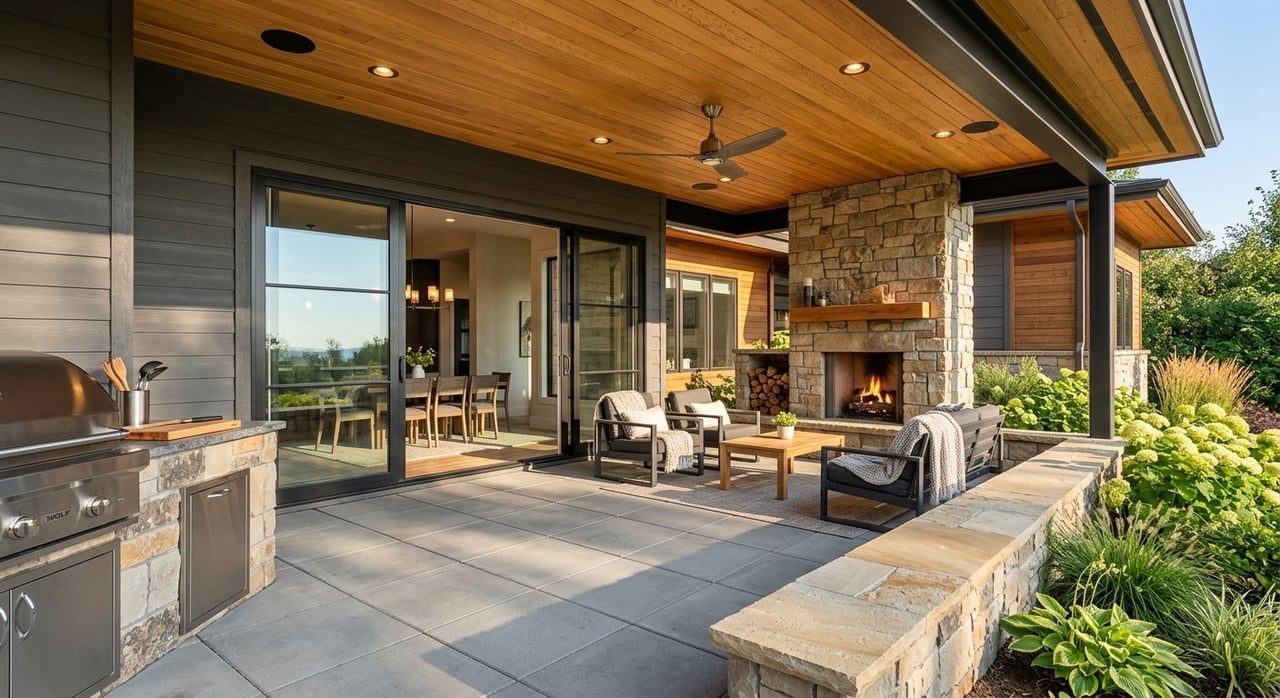
Luxury in Eagle is closely tied to how you live outside the home. A covered patio, outdoor room, or well-designed backyard often feels more valuable when it connects naturally to the surrounding lifestyle.
That is because Eagle’s amenity base strongly supports outdoor living. The city describes its parks and recreation system as built around trails, pathways, parks, open space, and recreation facilities, with planning efforts aimed at tying those assets together.
Recreation access strengthens the price story
On the ground, Eagle offers a range of nearby amenities that buyers recognize right away. The city lists Pamela Baker Park as the southernmost access point to the Eagle Greenbelt. Reid W. Merrill Sr. Community Park includes a splash pad and wetland-riparian area, while Stephen C. Guerber Park offers playground equipment, a splash pad, picnic shelters, a large playing field, and little league facilities.
Downtown, the Eagle Saturday Market operates in Heritage Park. Nearby, Eagle Island State Park is a 545-acre Boise River park with a swimming beach, grassy picnic area, more than five miles of trails, and non-motorized boating only.
For you as a buyer, proximity to these assets can help explain why homes with strong patios, easy trail access, or quick connections to parks and downtown often command more attention. These lifestyle benefits are hard to replicate with renovation alone.
Expensive upgrades are not always the same as true value
A luxury listing may include premium appliances, custom finishes, and striking design details. Those features matter, but they do not always explain the full price.
In Eagle, it helps to separate scarce features from replaceable features. Scarce features include lot size, privacy, views, recreation access, and a setting that feels naturally integrated with the land. Replaceable features include many finish choices, fixtures, and decor-driven updates.
Ask what the premium is really buying
When you tour a property, try to identify whether the asking price is driven by lasting location advantages or by upgrades that could be changed later. This can help you make a more grounded comparison between homes that seem similar at first glance.
A practical way to think about it is this:
- Is the premium tied to land, separation, view, or access?
- Does the house sit naturally on the lot?
- Does the architecture feel consistent with Eagle’s design-review environment?
- Could floodplain, setback, or design-review rules affect future plans?
- Is the home close to the greenbelt, downtown Eagle, Eagle Island, or other recreation assets that are difficult to duplicate?
What to focus on before you make an offer
If you want to buy confidently in Eagle’s luxury market, focus on the features that are hardest to change. Interior finishes may catch your eye first, but site quality and location factors often carry more lasting influence.
That means paying close attention to how the home is positioned, how much usable outdoor space it actually offers, and whether the setting delivers privacy, access, and everyday enjoyment. In a market where million-dollar pricing is normal, the strongest value often comes from the things that remain valuable long after design trends change.
If you are weighing luxury options in Eagle or comparing Treasure Valley opportunities with mountain and second-home goals, Valley Properties Group offers practical, place-based guidance to help you focus on what truly matters.
FAQs
What price range counts as luxury homes in Eagle, Idaho?
- In Eagle, luxury often starts around the million-dollar range, with Q1 2026 data showing a $989,900 median sold price and a $1,161,444 average sold price in Eagle MLS area 0900.
Why do lot size and privacy matter for Eagle luxury homes?
- Large lots, separation, privacy, and view corridors are important value drivers in Eagle because the city’s planning framework emphasizes open space, large-lot living, and view-sensitive placement.
How do Eagle design rules affect luxury home value?
- Eagle is a design-review city, so architecture, site planning, landscaping, and compatibility with local design standards can influence both market appeal and long-term value.
What should buyers know about river-adjacent homes in Eagle?
- River-area properties may offer a premium setting, but mapped flood hazard areas can require elevation or floodproofing measures for new construction and substantial improvements.
Does access to parks and trails raise home value in Eagle?
- Homes near amenities like the Eagle Greenbelt, Heritage Park, community parks, and Eagle Island State Park often benefit from lifestyle appeal that many buyers see as hard to replicate elsewhere.